Spain Wins 2026 FIFA World Cup: Full Recap of the Final vs. Argentina
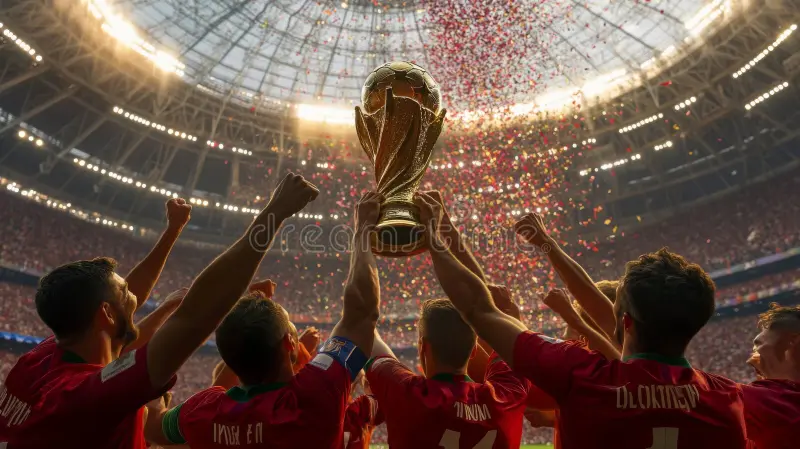
FIFA World Cup
Spain Wins 2026 FIFA World Cup: Full Recap of the Final vs. Argentina
Spain is once again world champion. In a tense, defense-heavy final at MetLife Stadium in New Jersey, Spain defeated Argentina 1-0 in extra time to claim the 2026 FIFA World Cup, capping off a dominant tournament run and denying Lionel Messi a shot at back-to-back titles. Here’s a full breakdown of how the final unfolded, the numbers behind Spain’s win, and what it means for both teams going forward.
How Spain Won the 2026 World Cup Final
The championship match, played on July 19, 2026, remained scoreless through 90 minutes of regulation despite Spain’s near-total control of the game. It took until the 106th minute — well into extra time — for substitute Ferran Torres to break the deadlock, pouncing on a bouncing ball inside the box and burying a left-footed shot just under the crossbar past Argentina goalkeeper Emiliano Martínez.
A Dominant Performance by the Numbers
Spain’s control of the match was reflected clearly in the statistics. Spain outshot Argentina 20 attempts to just two, held 60% possession, and finished with an expected-goals total of 1.94 compared to Argentina’s 0.2. Despite that dominance, Spain couldn’t find a breakthrough until extra time, largely due to a standout performance from Martínez, who finished the match with 12 saves — the most ever recorded in a World Cup final.
A Red Card Shifted the Momentum
Argentina’s task became even harder late in the match when midfielder Enzo Fernández was shown a second yellow card in second-half stoppage time, reducing Argentina to ten men heading into extra time. From that point on, Spain looked like the only team capable of finding a winner, and Torres delivered just moments into the second period of extra time.
What This Means for Spain
The win marks Spain’s second World Cup title, following their first championship in 2010, and comes on the heels of their UEFA European Championship win, cementing an especially strong run for Spanish football over the past two years. Spain also extended a historic unbeaten streak in regular time, stretching to 38 matches without a loss, surpassing the previous European record set by Italy.
A Breakout Tournament Run
Spain’s path to the title included some early uncertainty, having opened their campaign with a draw against tournament debutants Cape Verde before steadily building momentum through the knockout rounds. Young stars like Lamine Yamal and Pau Cubarsí played prominent roles throughout the tournament, pointing to a talented core that could remain competitive for years to come.
What This Means for Argentina and Messi
For Argentina, the final represented a missed opportunity to become the first team in the modern era to win four consecutive major international tournaments, following their Copa América titles in 2021 and 2024 and their 2022 World Cup win. Instead, the team fell short in what may have been Lionel Messi’s final World Cup appearance.
Messi’s World Cup Legacy
At 39 years old, Messi’s performance in the final continued a historic run at the tournament level. He became just the second player ever to appear in three separate World Cup finals, joining Brazilian legend Cafu, though he was unable to add another Golden Boot or trophy to his résumé in this outing. Argentina manager Lionel Scaloni acknowledged the disappointment afterward while praising his team’s effort throughout the tournament, saying the squad had “played our hearts out” despite the result.
A High-Profile Closing Ceremony
The final also featured a star-studded atmosphere, with U.S. President Donald Trump among the attendees at MetLife Stadium. The closing ceremony, which delayed kickoff by several minutes, included an appearance from actor Tom Cruise, adding an especially high-profile American touch to the first World Cup final hosted in the United States since 1994.
Why This World Cup Was Historic
Beyond the final itself, the 2026 tournament marked several milestones. It was the first World Cup jointly hosted by the United States, Mexico, and Canada, and the first to feature an expanded 48-team format, giving more nations a chance to compete on the sport’s biggest stage. FIFA has since confirmed that the 2030 World Cup could expand even further, potentially growing to 64 teams.
What’s Next for International Football
With the 2026 tournament now complete, attention will begin shifting toward the next major international competitions, including continental championships and World Cup qualifying for 2030. For Spain, the challenge will be sustaining their current level of dominance, while Argentina faces questions about how the team evolves in a potential post-Messi era at the international level.
Final Thoughts
Spain’s extra-time victory over Argentina delivered a fitting, hard-fought ending to one of the most historic World Cups in the tournament’s history. With a dominant performance from start to finish and a golden generation of young talent still developing, Spain’s second World Cup title may be a sign of more success to come — while Argentina and Messi’s era closes out with one final near-miss on the world’s biggest stage.
About The Author