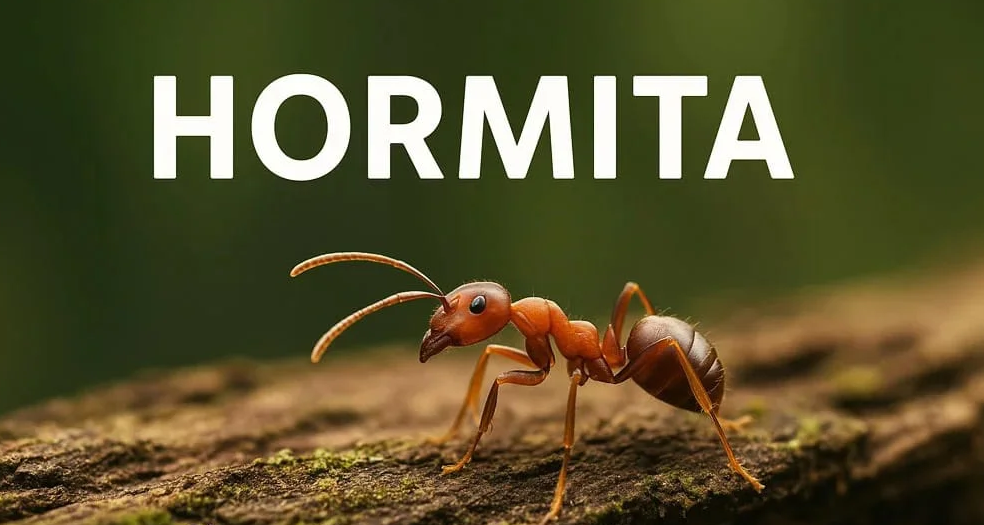
hormita
Ant Facts: Amazing Truths About the World’s Most Fascinating Insect
Ants are everywhere—crawling across sidewalks, marching through kitchens, and building sprawling colonies underground. Most people barely give them a second glance. But beneath their tiny exoskeletons lies one of the most sophisticated social systems in the animal kingdom. Ants have been farming, warring, engineering, and cooperating for over 100 million years, long before humans ever walked the earth.
This guide explores the science behind these remarkable insects: how they’re built, how they communicate, and why scientists consider them one of nature’s greatest success stories.
What Makes Ants So Successful?
Ants belong to the family Formicidae, with more than 12,000 known species living on every continent except Antarctica. Their success comes down to one defining trait: cooperation. Unlike most insects, ants live in highly organized colonies where individuals sacrifice personal survival for the good of the group.
A Combined Weight Greater Than Humans
Scientists estimate there are roughly 20 quadrillion ants on Earth. Combined, their total biomass is estimated to rival or exceed that of all humans on the planet. Despite their microscopic size, ants are ecological powerhouses—aerating soil, dispersing seeds, and controlling pest populations across nearly every ecosystem.
The Anatomy of an Ant
Understanding ant behavior starts with understanding their bodies, which are engineered for strength, communication, and survival.
Incredible Strength
Ants can carry objects 10 to 50 times their own body weight, depending on the species. This strength comes from their compact, lightweight exoskeleton and highly efficient muscle structure—proportionally, ants are far stronger than humans could ever be.
No Lungs, No Blood as We Know It
Ants don’t breathe through lungs. Instead, oxygen enters through tiny holes called spiracles and travels directly to tissues through a network of tubes. Their “blood,” called hemolymph, doesn’t carry oxygen the way human blood does—it primarily transports nutrients and waste.
Two Stomachs
Many ants have two stomachs: one for personal digestion and a second, called the crop, used to store food for sharing with other colony members through a process called trophallaxis.
How Ants Communicate
Ants don’t have voices, yet they coordinate colonies of millions with remarkable precision.
Pheromone Trails
When an ant finds food, it leaves a chemical trail—a pheromone—on its way back to the nest. Other ants follow this scent, reinforcing the trail with their own pheromones as they travel. This is why ants often appear to move in orderly lines.
Touch and Vibration
Ants also communicate through antennae contact and body vibrations, sending signals about danger, food location, or colony needs. Some species even produce sounds by rubbing body parts together, a process called stridulation.
Life Inside the Colony
An ant colony functions like a single organism made up of thousands of individual parts, each with a specialized role.
The Queen’s Role
Every colony centers around one or more queens, whose sole function is reproduction. A queen can live for years—sometimes decades—laying thousands of eggs during her lifetime, far outliving worker ants, which typically survive only weeks to months.
Worker Ants and Division of Labor
Worker ants, all female, take on different jobs depending on age and colony needs: foraging for food, defending the nest, caring for larvae, or expanding tunnels. This division of labor allows colonies to operate with remarkable efficiency.
Male Ants
Male ants exist for one purpose—mating with a queen during nuptial flights. Most die shortly after fulfilling this role.
Surprising Ant Behaviors
Beyond the basics, ants exhibit behaviors that continue to surprise scientists.
Farming and Agriculture
Leafcutter ants cultivate fungus gardens, feeding them chewed leaf fragments and harvesting the fungus as their primary food source—a form of agriculture that predates human farming by millions of years.
Livestock Keeping
Some ant species “farm” aphids, protecting them from predators in exchange for honeydew, a sugary substance aphids secrete. This mutually beneficial relationship closely mirrors human animal husbandry.
Building Living Structures
Fire ants and army ants can link their bodies together to form rafts, bridges, and even shelters, allowing colonies to survive floods or cross gaps that individual ants couldn’t manage alone.
Warfare and Territory
Ant colonies engage in coordinated battles over territory and resources, sometimes involving thousands of soldiers. Some species even conduct raids to capture the larvae of rival colonies, raising them as their own workers.
Why Ants Matter to Ecosystems
Ants play a critical, often overlooked role in maintaining healthy environments.
- Soil aeration: Their tunneling improves soil structure and nutrient distribution, benefiting plant growth.
- Seed dispersal: Many plant species rely on ants to carry seeds to new locations, a process known as myrmecochory.
- Natural pest control: Ants prey on other insects, helping regulate populations of potential crop pests.
- Decomposition: Ants help break down organic matter, recycling nutrients back into the ecosystem.
Without ants, many ecosystems would struggle to maintain the balance they rely on.
Common Ant Myths Debunked
Myth: All Ants Bite or Sting
While species like fire ants deliver painful stings, most ants are harmless to humans and simply forage for food.
Myth: Ants Are Mindless
Ants exhibit problem-solving behavior, memory, and even basic decision-making as a collective—something scientists refer to as “swarm intelligence.”
Myth: One Ant Colony Equals One Nest
Some species, like Argentine ants, form supercolonies spanning miles, with multiple nests functioning as a single interconnected society.
Final Thoughts
Ants may be small, but their impact on the natural world is enormous. From engineering complex societies to shaping entire ecosystems, these insects demonstrate that intelligence and strength don’t require size—they require cooperation. The next time you see a line of ants marching across your yard, know that you’re witnessing millions of years of evolutionary success in action, one tiny footstep at a time.
About The Author