How Pakistan Helps America and Iran to Solve Issues and Stop the War
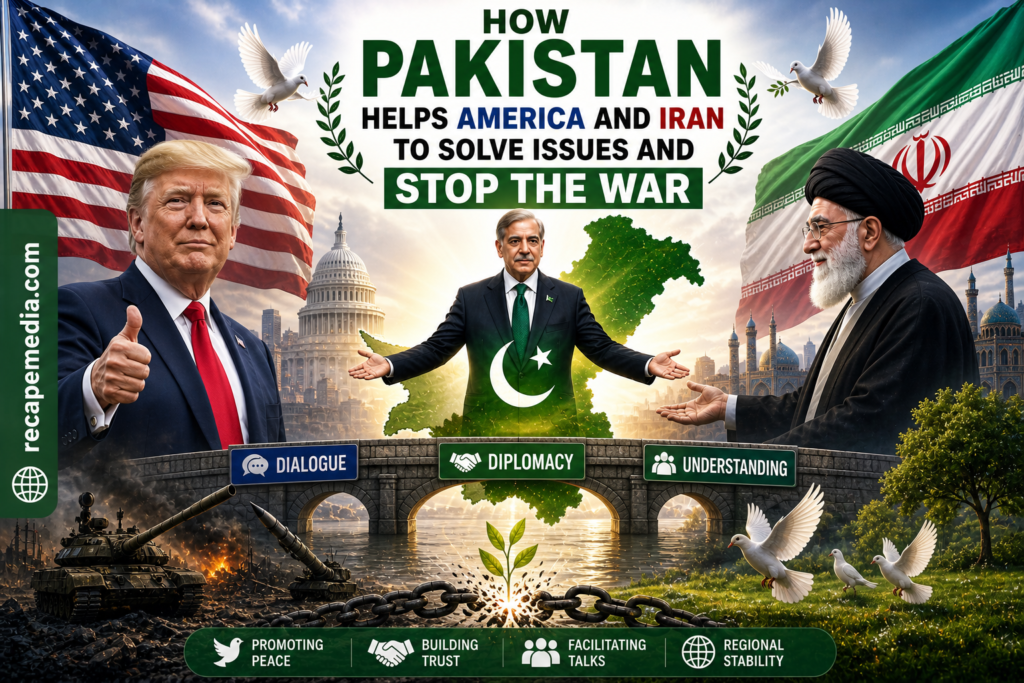
Pakistan Helps America and Iran to Solve Issues
War changes everything. Prices rise. Fear spreads. And ordinary people suffer the most. I’ve seen how even small conflicts shake entire regions, so imagine a major clash between the United States and Iran. It’s huge. Scary. Complicated.
But here’s something interesting—and honestly, a bit hopeful.
Pakistan is quietly trying to stop it.
Pakistan as a Bridge Between Two Enemies
Pakistan is not just watching from the sidelines. It is actively acting as a mediator, trying to bring both sides—America and Iran—to the same table. That’s not easy. These two countries have decades of tension, mistrust, and conflict.
Still, Pakistan stepped in.
In fact, reports show that Pakistan has helped deliver messages, proposals, and peace plans between the two sides. Wikipedia
That’s big.
Sometimes diplomacy isn’t loud. It’s silent, careful, and behind closed doors. Pakistan seems to be doing exactly that.
The Role of Talks and Ceasefires
Let me explain it simply.
Pakistan has pushed for ceasefires—basically pauses in fighting. One major effort even helped create a temporary truce between the U.S. and Iran in April 2026. Le Monde
That pause mattered.
It gave both sides time to think, to talk, and maybe to avoid something worse. War doesn’t stop overnight, but small breaks can prevent disasters.
Pakistan also proposed longer plans, like a 45-day truce and reopening important trade routes like the Strait of Hormuz. Wikipedia
These are not small ideas. They affect global oil, the economy, and millions of lives.
Messages, Proposals, and Backchannel Diplomacy
Here’s where things get even more interesting.
Iran actually sent a detailed peace proposal to the United States through Pakistan. Yes, through Pakistan. Business Insider
That shows trust—at least some level of it.
Pakistan acts like a messenger, but not just a messenger. More like a translator of intentions. It helps each side understand what the other really wants.
In my opinion, this role is underrated. People focus on big speeches, but these quiet exchanges often decide the future.
What Donald Trump Thinks About It
Now let’s talk about Donald Trump.
Trump has shown mixed reactions. On one hand, he agreed to ceasefires and allowed diplomatic time. On the other, he remains skeptical about Iran’s offers.
He even said Iran’s proposals are “not acceptable” and questioned their intentions. The Guardian
At times, his tone is tough. He talks about pressure, sanctions, and even military options.
But here’s the twist—he is still reviewing peace proposals sent through Pakistan.
That tells you something.
Even strong leaders rely on mediators when things get too risky.
Iran’s Position and Masoud’s Perspective
Iran’s leadership, including figures like Masoud Pezeshkian (often discussed in political circles and online conversations), generally emphasizes sovereignty and fairness.
From what I’ve seen in discussions and posts on platforms like X (Twitter), many Iranian voices believe negotiations must include:
- Lifting sanctions
- Security guarantees
- Respect for their nuclear rights
And honestly, that makes sense from their perspective.
Iran has also used Pakistan to communicate its demands clearly, showing it prefers indirect talks instead of direct confrontation.
Why Pakistan Is Trusted by Both Sides
This is the real question.
Why Pakistan?
I think it comes down to balance.
Pakistan has relations with the United States. It also shares cultural and regional ties with Iran. It doesn’t fully take sides in the conflict, which makes it a safer middle ground.
Historically, Pakistan has played similar roles. For example, it helped connect the U.S. and China in the 1970s. International Cooperation Center
So this isn’t new. It’s part of its diplomatic DNA.
Economic Pressure: A Hidden Motivation
Here’s something people often ignore.
Pakistan is also affected by this war.
Its Prime Minister said the conflict has already cost the country around $800 million. The Times Of India
That’s massive.
Fuel prices rise. Trade slows down. Everyday life becomes harder.
So Pakistan isn’t just helping out of goodwill—it also needs peace.
And honestly, that makes its efforts even more serious.
Challenges Pakistan Faces
Let’s be real. This isn’t easy.
Talks fail. Trust breaks. Deadlines pass.
Sometimes Iran refuses to join negotiations. Sometimes the U.S. increases pressure. Al Jazeera
It’s like trying to fix a broken relationship where both sides are angry—and armed.
Pakistan is stuck in the middle, trying to calm both.
That takes patience. And courage.
Can Pakistan Really Stop the War?
This is the big question.
I think… maybe not alone.
But it can slow things down. It can reduce tension. It can create space for peace.
And sometimes, that’s enough.
Because wars don’t always end with one big decision. They end with many small steps.
Pakistan is helping take those steps.
Final Thoughts
In a world full of conflict, mediation matters more than ever.
Pakistan’s role between the United States and Iran shows how a country can act as a bridge instead of a battlefield.
It’s not perfect. It’s messy. It’s slow.
But it’s necessary.
And honestly, I think we need more of this kind of diplomacy—not less.
Because at the end of the day, peace is not just an agreement.
It’s a process.
About The Author