
Foenegriek (Fenugreek): What It Is and How to Actually Use It
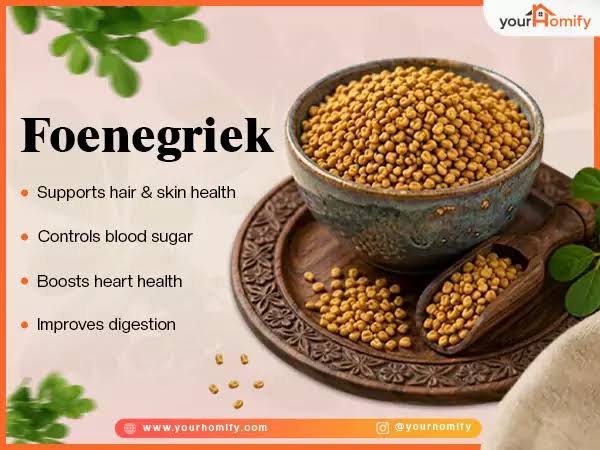
foenegriek
Foenegriek (Fenugreek): What It Is and How to Actually Use It
Ever rummaged through a spice rack and thought, what even is that little golden-brown seed? Foenegriek, better known in English as fenugreek. Sounds a bit exotic, maybe even a little intimidating. Honestly though, it’s less complicated than it sounds. Let’s actually break it down properly.
What Exactly Is Fenugreek?
Fenugreek, scientifically named Trigonella foenum-graecum, is a herb that’s been used for thousands of years. Not an exaggeration, genuinely thousands of years. It originally comes from Mesopotamia, and today it grows mainly in India, China, Ethiopia, and around the Mediterranean.
You’ll come across it under a few different names too, fenugreek, foenegriek in Dutch, or sometimes called “Greek hay.” A bit confusing, I know, but it’s all the same plant.
The seeds themselves are small, golden-brown, and have a spicy, slightly bitter taste with a warm, nutty undertone. Not something you’d eat by the handful, to be honest, but in the right amount, it does something genuinely special to a dish.
Where Do You Actually Taste Fenugreek?
If you’ve ever eaten an Indian curry, you’ve quite likely already tasted fenugreek without even realising it. It’s a core ingredient in a lot of curry powders and spice blends.
It also plays a big role in Iranian, Pakistani, Arabic, and North African cuisine. Think stews, lentil dishes, and spice blends alongside cumin and coriander, that kind of pairing.
I think people underestimate it, honestly. It sits a bit in the shadow of more famous spices like cumin or turmeric. But once you taste it in a well-balanced dish, you immediately understand why it’s stuck around for this long.
How Do You Actually Use Fenugreek in Cooking?
A few practical tips here, things that genuinely work.
Start small. Fenugreek isn’t something to experiment with on a large scale. A small amount goes a long way, and too much quickly makes a dish bitter. Dosing it carefully is really the key word here.
Toasting is optional, but recommended. It mellows the flavour and reduces the bitterness. Not required, but it genuinely improves the end result.
Raw works too. The flavour is noticeably stronger and more bitter that way, so most people prefer it toasted or cooked. Personally, I find cooked fenugreek tastier too, honestly.
Whole or ground seeds, both work fine. Whole seeds are great for stews where they slowly cook alongside everything else. Ground fenugreek is handier for quicker dishes where you want the flavour to hit immediately.
Pairs well with: curries, lentils, vegetables, and spice blends alongside cumin and coriander. That’s really where it shines.
Is Fenugreek Also Drunk as Tea?
Yes, actually, and it’s genuinely worth trying at least once. Fenugreek tea is made by steeping the seeds in hot water, roughly a teaspoon of seeds per cup seems to be the general consensus.
It tastes spicy, a bit bitter, not necessarily an instant favourite for everyone, but it’s built up its own loyal following. Some people drink it specifically for its possible calming properties, others simply because they enjoy the taste.
What Are the Possible Health Effects?
I want to be honest here, rather than making inflated claims.
Fenugreek has been used for centuries in Ayurveda, traditional Indian medicine, as well as in traditional Chinese medicine. There are indications it may support healthy digestion, and some studies suggest a possible positive effect on blood sugar levels.
It’s also sometimes used to support breastfeeding, since the herb may potentially help stimulate milk production. And interestingly, it also appears to have a positive effect on appetite, which can be useful if you’ve lost weight due to reduced appetite.
Worth knowing, and this genuinely applies to most herbs: these effects aren’t all rock-solid, scientifically proven facts. There’s research pointing toward positive properties, but results vary, and more research is needed before drawing firm conclusions. Health claims on supplement packaging are still under review by the European Commission and EFSA, so treat it as “promising,” not as a proven medicine.
How Much Fenugreek Is Safe?
For culinary use, meaning just in your cooking, 2 to 5 grams per day is generally considered safe. That works out to roughly half a teaspoon to a full teaspoon per meal, genuinely manageable.
For specific health purposes, studies often use higher amounts, somewhere between 5 and 10 grams of seed powder, or 500 to 600 milligrams of extract per day. Supplements vary quite a bit in dosage, so always read the packaging carefully.
Pregnant, breastfeeding, or taking medication? It’s genuinely wise to check with your doctor or pharmacist before using fenugreek as a supplement. There simply isn’t enough data on safety during pregnancy specifically.
A Small Word of Caution
Too much fenugreek isn’t necessarily dangerous in normal kitchen quantities, but it just won’t taste good if you overdo it. Your dish quickly turns too bitter, which is a shame after all that effort.
I think the golden rule here is genuinely simple: you can always add more, but you can’t take it back out. Start cautiously, taste as you go, and build up slowly if you notice the dish could handle more spice.
Final Thought
Fenugreek is, honestly, one of those herbs that’s easy to overlook, but it’s earned its place in kitchens around the world over centuries. From Indian curries to Middle Eastern stews, it brings something warm and spicy that few other herbs can really match.
Just try a small amount in your next curry or lentil dish, that’s probably the best way to actually get to know it. No dramatic health claims needed, just a genuinely good herb that’s earned its reputation honestly.
Useful links:
- De Kruidenbaron — Fenugreek: Everything About This Medicinal Superherb
- IVG — The Health Benefits of Fenugreek
- Natural Spices — How to Use Fenugreek: 8 Practical Tips
About The Author


