Pluto Facts 2026 — Why This Dwarf Planet Still Matters
pluto
Pluto. Just saying the name brings a weird little pang of nostalgia, doesn’t it? For anyone who grew up memorizing “My Very Educated Mother Just Served Us Nine Pizzas,” Pluto was the ninth planet — full stop, no asterisks. Then 2006 happened. In my experience, it’s one of the only astronomy facts kids actually get mad about. So let’s clear up what Pluto really is, why it got kicked out of the planet club, and why — honestly — it’s still one of the most fascinating objects in our solar system.
What Is Pluto, Really?
Pluto is a dwarf planet, orbiting the Sun way out in the Kuiper Belt — a frozen, debris-littered ring beyond Neptune. It’s small. Really small. Smaller than Earth’s Moon, in fact, with a diameter of about 2,377 kilometers (1,477 miles). You could walk across it in less time than it takes to drive across Texas, if walking in space were a thing.
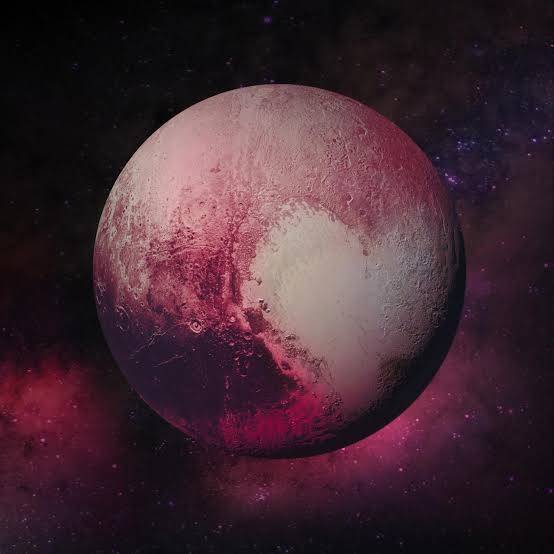
It takes Pluto roughly 248 Earth years to complete one trip around the Sun. Think about that. Someone born the year it was discovered, in 1930, still wouldn’t have seen it finish a single orbit. Its surface is a patchwork of nitrogen ice, methane frost, and reddish-brown tholins — organic compounds that give parts of Pluto a strange, rusty hue. I think that’s one of the most underrated facts about it; people assume it’s just a dead gray rock, but it’s got color, personality, even a heart-shaped glacier nicknamed Tombaugh Regio.
Why Did Pluto Stop Being a Planet?
Here’s the drama. In 2006, the International Astronomical Union (IAU) redefined what counts as a planet, and Pluto failed one key test: it hasn’t “cleared its orbit” of other debris. Mercury, Venus, Earth — they dominate their orbital paths. Pluto shares its neighborhood with a crowd of other Kuiper Belt objects.
So it got reclassified as a “dwarf planet.” Scientists like Neil deGrasse Tyson pushed hard for this change, and honestly, not everyone was thrilled. New Mexico and Illinois even passed symbolic resolutions declaring Pluto a planet within their borders, which — come on, that’s kind of hilarious. There’s still genuine scientific debate over whether the 2006 definition was even the right call. Some planetary scientists argue it was rushed, voted on by a small fraction of IAU members, and poorly worded. Make of that what you will.
Quick Pluto Facts You’ll Actually Remember
- Discovered: February 18, 1930, by Clyde Tombaugh, a 24-year-old working at Lowell Observatory.
- Named by an 11-year-old English schoolgirl, Venetia Burney, who suggested “Pluto” after the Roman god of the underworld.
- Has five known moons — Charon, Styx, Nix, Kerberos, and Hydra. Charon is so big relative to Pluto that some scientists call them a “double dwarf planet” system.
- A year on Pluto equals about 248 Earth years; a day lasts roughly 6.4 Earth days.
- Average surface temperature: around -229°C (-380°F). Bring a heavy coat. Several, honestly.
The New Horizons Flyby Changed Everything
For decades, Pluto was just a blurry smudge, even through the best telescopes. Then, in July 2015, NASA’s New Horizons spacecraft flew within 12,500 kilometers of Pluto’s surface after a nine-and-a-half-year journey. Nine and a half years! I can barely commit to a Netflix series that long.
The images it sent back were stunning — mountain ranges made of water ice, nitrogen glaciers that flow like Earth’s, and that now-famous heart shape. It also revealed a thin, hazy atmosphere and hints of an underground ocean. Suddenly Pluto wasn’t a dot. It was a world.
Why Pluto Still Matters
Call it a planet, call it a dwarf planet, call it whatever label satisfies the IAU committee of the moment — Pluto’s story matters because it changed how we think about classification itself. It taught us the solar system is messier, and more interesting, than nine tidy planets in a row.
In my view, the “demotion” actually made Pluto more compelling, not less. It opened the door to understanding the whole Kuiper Belt, a region packed with icy worlds we’re only beginning to map. Pluto became a gateway, not a footnote.
The Bottom Line
Pluto isn’t a planet by the current official definition, but it’s still out there, still fascinating, still inspiring arguments at dinner tables and classrooms decades after it was first spotted. Science changes. Definitions change. Pluto, somehow, just keeps winning hearts anyway.
Sources:
- NASA: Pluto Overview
- International Astronomical Union: Pluto and the Definition of a Planet
- National Geographic: Pluto Facts
About The Author