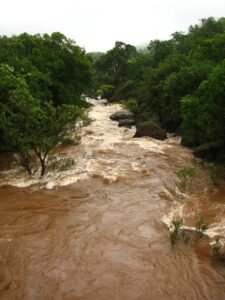
The Muddy River: Nature’s Unsung, Chaotic Beauty
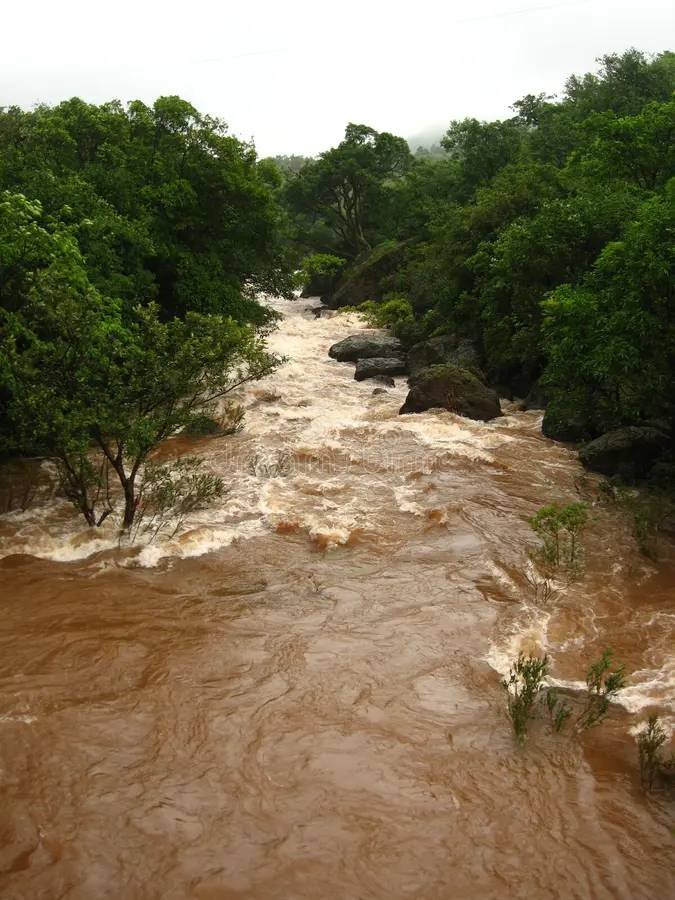
muddy river
I grew up near a river that nobody would ever put on a postcard. It wasn’t blue. It wasn’t clear. It was brown, thick, and honestly kind of ugly to a kid who’d seen pictures of mountain streams in textbooks. But that muddy river taught me more about nature than any clean, pretty stream ever could.
So why is a muddy river even muddy?
Simple answer: dirt. Rivers pick up loose soil, silt, and clay from their banks and from the land they drain. Rain washes particles off farmland, construction sites, and riverbanks straight into the current. The faster the water moves, the more sediment it can carry — and the murkier it gets.
Some rivers are naturally muddy their whole lives. The Mississippi, for instance, carries an enormous sediment load down from the heart of the United States. Other rivers only turn brown after a storm, then clear up again within a day or two. It depends on the soil type, the rainfall, and how much vegetation is holding the banks together.
I think people assume mud means something’s wrong. It doesn’t, usually. A little turbidity (that’s the technical word for murky water) is just part of a healthy, active river system.
What actually lives in all that mud
Here’s the thing nobody tells you: muddy rivers are often bursting with life, even if you can’t see it. Catfish, for example, practically thrive in low-visibility water — they use whiskers (barbels) to feel and taste their way around instead of relying on sight. Carp, gar, and various mussels do fine too.
Below the waterline, there’s a whole ecosystem of microorganisms breaking down organic matter. The riverbed itself is often soft and squishy, home to worms, insect larvae, and tiny crustaceans that bigger fish feed on. It’s not glamorous. But it works.
In my experience wading through a few of these rivers as a kid (against my mother’s explicit instructions), you learn fast that the mud isn’t just gunk — it’s basically a nutrient bank. Decomposing leaves, animal waste, dead insects, all of it gets ground into that sediment and recycled back into the food chain.
Mud isn’t the enemy — except when it is
Now, I won’t pretend excess sediment is always a good thing. Too much mud, usually from erosion caused by deforestation or poor farming practices, can smother fish eggs, clog gills, and block sunlight that aquatic plants need to photosynthesize. There’s a real difference between natural turbidity and human-caused sediment pollution.
Scientists actually track this using something called a turbidity scale, measured in NTU (nephelometric turbidity units). A river with moderate, seasonal mud is one thing. A river choked with runoff from a stripped construction site, year-round? That’s a problem, and it usually signals bigger issues upstream.
Short version: nature’s mud, generally fine. Human-caused mud overload, not so fine.
Muddy rivers shape the land around them
Here’s something genuinely wild — muddy rivers build land. When a river full of sediment slows down, maybe at a bend, or where it meets the ocean, it drops that sediment. Over thousands of years, this is literally how deltas form. The Nile Delta, the Mississippi Delta, the Ganges Delta — all built from mud, patiently deposited, layer by layer.
So when you’re looking at a brown, swirling river, you’re not looking at something broken. You’re watching the slow construction of future farmland, future wetlands, maybe even a future coastline. That’s kind of incredible when you think about it.
Why they matter to us, practically speaking
Muddy rivers irrigate crops. They support fisheries that feed millions of people. They replenish floodplains with nutrient-rich soil, which is honestly one of the oldest farming tricks humans figured out — ancient Egyptians built their entire agricultural calendar around the Nile’s annual muddy flood.
They’re also just… underrated. We romanticize the crystal-clear mountain stream and ignore the workhorse river that’s actually feeding half a continent. That always struck me as a little backwards.
A quick word on safety
If you’re near one, a few basics: don’t assume shallow because it’s murky — depth is deceiving when you can’t see the bottom. Watch for hidden debris, strong currents, and slippery banks. Kids especially should be supervised, because mud hides a lot, including sudden drop-offs.
The takeaway
A muddy river isn’t a failed version of a clean one. It’s its own thing — messy, functional, alive in ways that aren’t always visible from the bank. Next time you drive past one and think “ugh, that’s gross,” maybe give it a second look. There’s a whole hidden world down there, quietly doing the work that keeps ecosystems, farms, and honestly entire civilizations running.
I still think about that brown river from my childhood sometimes. Turns out it was a lot more interesting than it looked.
Sources / Further Reading:
About The Author