Dependent Variable: Definition, Examples, and How to Identify One
images (69)
If you’ve ever run an experiment, read a research paper, or sat through a science class, you’ve encountered the term “dependent variable.” It’s one of the most fundamental concepts in research design, yet it’s also one of the most commonly confused — especially when it comes to telling it apart from its counterpart, the independent variable.
Understanding the dependent variable isn’t just academic. Whether you’re designing a school science project, analyzing survey data, or reading a clinical study, knowing which variable is “dependent” tells you what’s actually being measured and why it matters. This guide breaks down the definition, shows you real examples, and gives you a simple method for identifying dependent variables in any study.
What Is a Dependent Variable?
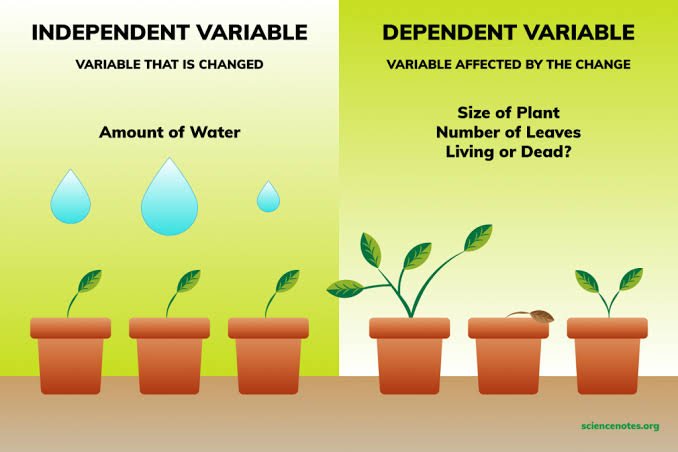
A dependent variable is the factor that a researcher measures in an experiment or study — the outcome that changes in response to another variable. It’s called “dependent” because its value depends on something else being manipulated or observed, known as the independent variable.
Put simply: the independent variable is the presumed cause, and the dependent variable is the effect. If you’re testing how sunlight affects plant growth, the amount of sunlight is the independent variable, and the plant’s growth is the dependent variable, since it’s the outcome you’re actually tracking.
Dependent Variable vs. Independent Variable
It’s easy to mix these two up, so here’s a quick way to remember the difference:
- Independent variable: The variable you control or change.
- Dependent variable: The variable you measure, which responds to that change.
According to Scribbr’s guide on independent and dependent variables, you can think of the relationship in terms of cause and effect — the independent variable is the cause, while the dependent variable is the effect. If you change one thing in an experiment and observe how another thing responds, the thing you’re observing is your dependent variable.
Why the Dependent Variable Matters in Research
The dependent variable is the heart of any experiment. It’s the answer to the question, “What am I trying to find out?” Without a clearly defined dependent variable, a study has no measurable outcome, which makes it impossible to draw meaningful conclusions.
A well-designed study also uses an operational definition for its dependent variable — a precise explanation of exactly how it will be measured. For example, “aggression” is too vague to measure directly, so a researcher might operationally define it as the number of aggressive verbal statements recorded during an observation period, as noted in Simply Psychology’s overview of variables.
Examples of Dependent Variables
Seeing dependent variables in context makes the concept much easier to grasp. Here are a few common examples across different fields:
In Science
- Question: Does the amount of fertilizer affect crop yield?
- Independent variable: Amount of fertilizer applied
- Dependent variable: Crop biomass at harvest
In Psychology
- Question: Does stress affect heart rate?
- Independent variable: Stress level
- Dependent variable: Heart rate
According to NC State’s LabWrite resource, the dependent variable “responds” to the independent variable, and in a controlled experiment, you cannot have one without the other.
In Everyday Life
Dependent variables aren’t limited to labs. As Statistics How To explains, everyday outcomes work the same way: how well you perform in a race depends on your training, and how much you earn depends on the hours you work. In both cases, performance and earnings are the dependent variables.
In Math and Statistics
In a mathematical function like y = f(x), y is the dependent variable because its value is determined by x, the independent variable. This same logic extends to statistical modeling, where the dependent variable is the outcome a model is trying to predict or explain, often based on one or more predictor variables.
How to Identify a Dependent Variable
If you’re unsure which variable in a study is dependent, ask yourself these three questions:
1. What is being measured?
The dependent variable is always the thing being measured or recorded as an outcome — not the thing being changed.
2. What would change if the independent variable changed?
If altering one factor would logically cause another factor to shift, the factor that shifts is your dependent variable.
3. Does it appear in the research question as the effect?
Research questions are often phrased as “Does X affect Y?” In this structure, Y — the outcome — is almost always the dependent variable.
Common Mistakes When Identifying Dependent Variables
Even experienced researchers occasionally misidentify their variables. Here are a few pitfalls to avoid:
- Confusing correlation with causation: Just because two variables move together doesn’t mean one depends on the other. Controlled experiments are needed to establish true cause-and-effect relationships.
- Using vague definitions: A dependent variable like “happiness” or “success” needs an operational definition — a specific, measurable way to record it.
- Testing too many dependent variables at once: Studies that track a large number of outcomes without a clear primary variable can produce confusing or unreliable results.
- Mixing up which variable is manipulated: Remember, the independent variable is controlled by the researcher; the dependent variable is not.
Dependent Variables in Multiple-Variable Studies
Not every study has just one dependent variable. A single independent variable can influence several outcomes at once. For example, in a study on diet and health, a researcher might track blood sugar, blood pressure, and body weight — each of these is its own dependent variable tied to the same independent variable, as illustrated in Scribbr’s types of variables guide. Keeping these outcomes clearly separated helps ensure each result can be interpreted accurately.
About The Author