Gen Beta Explained: Who They Are and Why 2025 Changed Everything
gen beta
Gen Beta Explained: Who They Are and Why 2025 Changed Everything
So there’s a new generation now. Officially. Just… arrived, quietly, on the 1st of January 2025, with basically no fanfare compared to how much noise gets made about millennials or Gen Z. Funny how that works, isn’t it? The generation that’ll live longest gets the quietest entrance.
Let’s actually get into who Gen Beta is.
Okay, So Who Exactly Is Gen Beta?
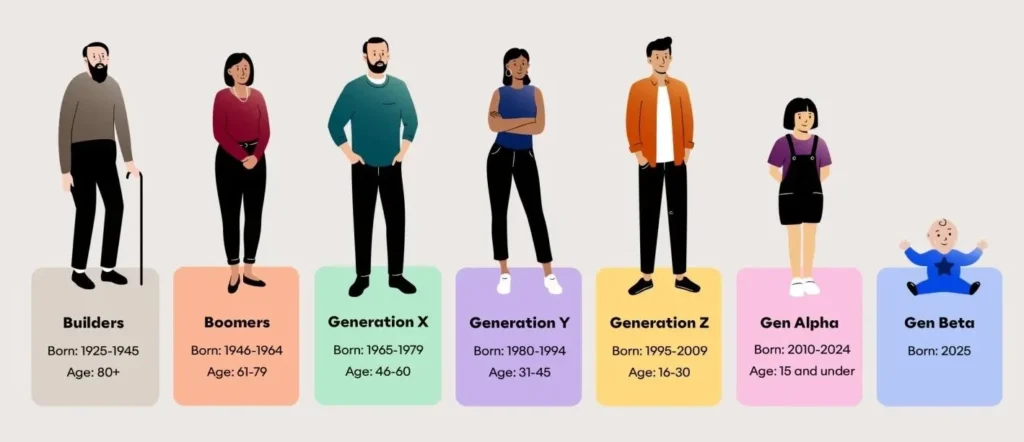
Generation Beta is defined as those born between 2025 and 2039. That’s the working definition from social researcher Mark McCrindle, the demographer generally credited with naming this generation in the first place.
Most members of this generation are expected to live well into the 22nd century, which is a genuinely wild thing to sit with for a second. A baby born this year could, realistically, be alive in the year 2100 and beyond. I think that fact alone says something about how differently we should probably be thinking about these kids.
Babies born on and after January 1, 2025, and over the next 14 years, will be part of Generation Beta, making them, right now, the youngest defined generational cohort on the planet.
Where Does the Name “Beta” Actually Come From?
Here’s a bit of trivia I genuinely didn’t know until I looked into this properly. The name Gen Beta is taken from the Greek alphabet, following directly on from Generation Alpha before it.
Mark McCrindle, who coined the term, uses 2025 as the starting birth year and 2039 as the ending year, following on from his Alpha date range of 2010 through 2024.
I think the Greek letter approach is actually a smart move, honestly, compared to older naming conventions. Categorising generations comes from the domain of social science rather than popular culture, so naming them scientifically, using letters, makes more sense than vague cultural terms like “millennial,” which never had a clean, agreed-upon start or end date to begin with.
Not everyone’s thrilled with the name, mind you. Since the term “beta” is sometimes used as an insult meaning someone weak or passive, some commentators have suggested a different name might eventually catch on instead. Fair point, honestly. Naming an entire generation after a word that doubles as an internet insult feels like it could backfire a bit.
Why Does Gen Beta Follow Gen Alpha?
Generation Beta follows Generation Alpha, born 2010 to 2024. Gen Alpha, worth remembering, was itself a fairly recent naming shift, the first generation to be born entirely in the 21st century and the third millennium.
The idea behind moving to Greek letters, from what McCrindle’s explained, wasn’t just about running out of Latin ones. It was meant to signify how these generations would be raised in a genuinely new world of technological integration. There’s symbolic weight to it, basically saying: these kids aren’t just the “next batch,” they’re growing up in a different reality than anyone before them.
Worth noting, honestly, that this isn’t some official, government-stamped classification. Since no official body determines generational boundaries, the starting year could still be revised down the line. So take the exact dates as a useful guideline, not gospel carved in stone.
What Will Gen Beta’s World Actually Look Like?
This is the bit I find genuinely fascinating, honestly. According to McCrindle, the digital and physical worlds are expected to blend seamlessly for this generation.
While Gen Alpha witnessed the rise of smart technology and AI, Gen Beta will grow up in a world where these tools are already fully integrated into daily life. That’s a subtle but important distinction, I think. Gen Alpha watched AI arrive. Gen Beta will never remember a version of life without it.
Unlike previous generations, who had to adjust to new technology as it appeared, Gen Beta will grow up with it already baked into everyday existence. They’ll likely never know a world without the internet or smart devices. Smartphones, voice assistants, AI tutors, none of it will feel novel to them. It’ll just be the furniture of daily life.
Who’s Actually Raising Gen Beta?
Gen Beta includes the children of younger millennials and older Gen Zs, which is a genuinely interesting detail, honestly. These are, largely, the most digitally fluent parents in human history, raising kids in an even more digitally saturated world than the one they themselves grew up in.
And here’s a twist I didn’t expect: as the most technologically savvy generation of parents, Gen Z sees the benefits of screen time and connected devices, but they also see the downsides clearly, and many are actively pushing back on the age at which their own children get access to technology.
I think that’s actually a hopeful little detail, honestly. The generation most fluent in tech might also end up being the most cautious about handing it to their kids too early. Lived experience teaching a lesson that older, less tech-native parents maybe couldn’t have taught as clearly.
Just How Big Will This Generation Be?
Gen Beta is projected to make up around 16% of the global population by 2035, according to McCrindle’s estimates. That’s not a small slice of humanity, honestly, roughly one in every six people on Earth within a decade.
What Traits Are Expected to Define Them?
A few themes come up consistently across the early research on this, worth flagging honestly, since it’s still early days and a lot of this is prediction rather than observed fact.
Tech fluency is one recurring theme, expected to run deeper than even Gen Alpha’s, given constant exposure to AI, virtual reality, and smart systems from birth. Adaptability is another, with researchers expecting this generation to embrace developments like quantum computing and immersive digital environments as just… normal parts of growing up.
Their upbringing is also expected to emphasise innovation not just for convenience, but for solving the genuinely pressing challenges of their time. I think that’s a nice framing, honestly. Less “look at this cool new gadget,” more “here’s a tool to actually fix something broken.”
A Word of Honest Caution
I think it’s worth being upfront about something here: nobody actually knows for certain what Gen Beta will be like yet. Most of them haven’t even learned to talk. Generational trait predictions this early are, by nature, educated guesses dressed up as confident statements.
That said, the pattern’s been fairly consistent historically. Each generation genuinely does seem shaped meaningfully by the technology and events surrounding their childhood. So the predictions aren’t baseless, exactly. Just, appropriately, provisional.
Final Thoughts
Gen Beta arrived quietly, no headlines blaring, no cultural moment marking the shift the way, say, 9/11 or the 2008 financial crash shaped earlier generational identities. Just a calendar flipping to 2025, and a new cohort beginning, almost unnoticed, in maternity wards worldwide.
I think that’s honestly fitting, in a way. This is a generation that’ll grow up with technology so deeply woven into daily life that it won’t even register as remarkable to them. No fanfare needed. It’s just going to be normal, for kids who’ll never remember a version of the world without it.
Useful links:
- McCrindle: Generation Beta Defined
- Wikipedia: Generation Beta
- Good Morning America: 5 Things to Know About Gen Beta
About The Author