The Ice Cream Cone: Its History, Types, and Why We Still Love It
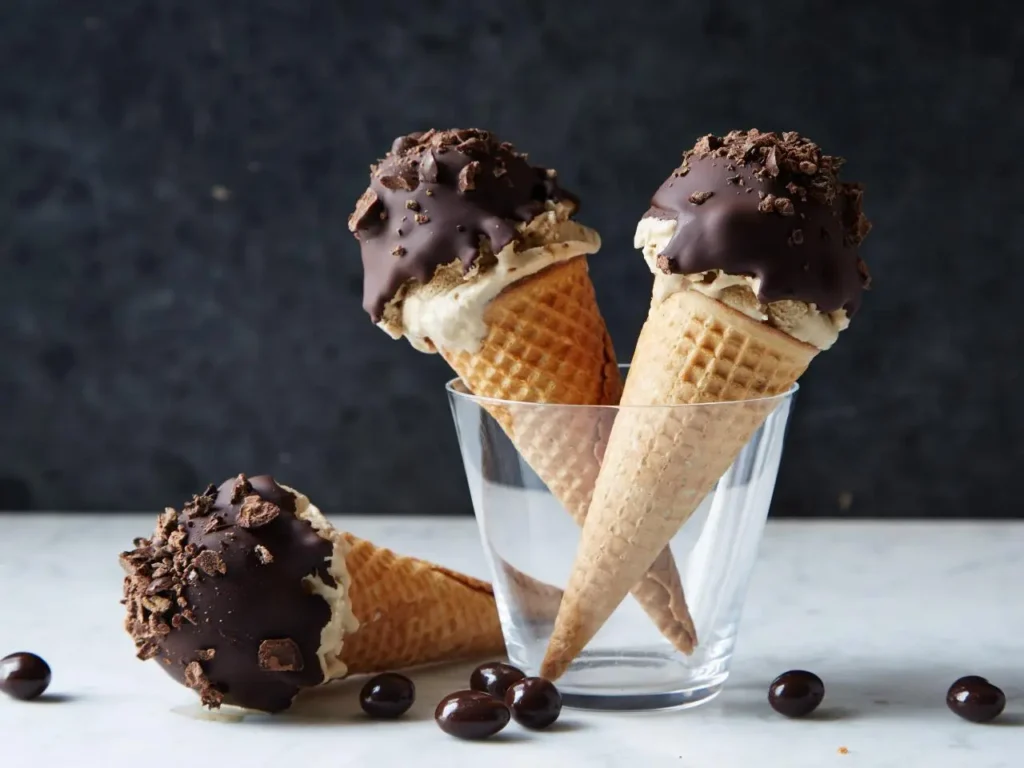
ice cream cone
The Ice Cream Cone: Its History, Types, and Why We Still Love It
There’s something about handing a kid an ice cream cone and watching their whole face change. Instant joy. No effort required. I think that’s honestly the whole appeal in one sentence, right there.
But where did this whole thing actually come from? Let’s find out.
A Dessert With a Genuinely Messy History
Here’s a fun little secret: nobody actually agrees on who invented the ice cream cone. Genuinely. Historians have been arguing about it for over a century, and there’s still no single, tidy answer.
The most commonly told story points to the 1904 St. Louis World’s Fair. As the legend goes, an ice cream vendor ran out of dishes. A waffle vendor nearby, often named as Ernest Hamwi, a Syrian immigrant selling a crisp pastry, saw the problem and rolled one of his warm waffles into a cone shape on the spot. Ice cream went in. Crowd went wild. A dessert legend was born.
Good story, isn’t it? Except it’s probably not the whole picture.
The Earlier Claims Nobody Talks About
Long before 1904, an Italian immigrant named Italo Marchiony was already selling edible cone-like containers in New York City. He claimed to have been doing it since 1896, and he actually secured a US patent for a cone-making mold back in December 1903, months before the famous World’s Fair moment.
And it goes back even further than that, honestly, which surprised me when I first dug into it. Cone-shaped pastries used for holding cream or ice cream show up in French cookbooks as early as the 1820s. There’s even a French illustration from 1807 that some historians believe shows a young girl eating something suspiciously cone-shaped.
So the honest answer is: nobody invented the ice cream cone in a single dramatic moment. It evolved, slowly, across different countries, different vendors, different decades, until it landed on the version we know today.
Why the World’s Fair Story Stuck Anyway
I think the World’s Fair story survived because it’s just a better story, honestly. A crisis, a quick fix, a crowd cheering. That’s a proper narrative, the kind that gets repeated at dinner tables for generations. Marchiony’s slow, patent-office version doesn’t have the same drama, even though his claim arguably has stronger paperwork behind it.
Funny how history sometimes remembers the better story over the more accurate one.
The Different Types of Cones
Not all cones are created equal, and honestly, this is where personal preference gets fierce. Everyone’s got an opinion.
The wafer cone. Thin, light, a bit plain in flavour, but crisp and unobtrusive. This is probably the most common cone found at big commercial ice cream chains.
The sugar cone. Slightly sweeter, a bit thicker, with a satisfying crunch. A step up from the plain wafer, in my opinion, and honestly my personal go-to.
The waffle cone. The heavyweight champion, thick, chewy-crisp, often rolled fresh in-store. That distinctive smell wafting out of an ice cream shop? Almost always a waffle cone being made. It’s the closest modern version to what Hamwi supposedly rolled back in 1904.
Different textures, different eating experiences, honestly. Some people want the cone to basically disappear behind the ice cream. Others treat the cone as the main event.
Why the Cone Actually Mattered, Practically
Beyond the fun factor, the cone solved a genuinely gross problem that people don’t talk about much anymore. Before edible cones became common, ice cream was often served in small glass cups called “penny licks.” Customers licked the ice cream out, handed the glass back, and the vendor gave it a quick wipe before refilling it for the next person.
Sanitation, understandably, was a real concern. Edible, disposable cones solved that problem instantly. No washing, no reuse, no lingering germs from the last customer. It’s easy to forget that the cone wasn’t just a cute container, it was genuinely a public health improvement, dressed up as dessert.
A Snack That’s Stuck Around for a Reason
I think what’s genuinely impressive about the ice cream cone is how little it’s actually changed in over a century. Sure, we’ve got soft-serve machines now, waffle cone irons, fancy dipped and sprinkled versions all over social media. But the basic concept, cold treat, edible crunchy container, no cleanup, hasn’t needed reinventing.
There’s something honestly comforting about that. In a world where everything gets an app, a subscription model, or a “disrupted” version every five minutes, the ice cream cone just… stayed the same. Simple. Reliable. Handed to a kid at a fair, then and now.
A Few Fun Facts Worth Knowing
- The ice cream cone industry grew fast enough by the early 1900s that entire companies, like the Missouri Cone Company, existed purely to manufacture cones at scale.
- Mechanised cone-rolling machines started appearing around 1912, meaning cones no longer had to be hand-rolled one at a time, a genuine game-changer for speed and cost.
- Some food historians point to evidence of cone-like edible containers existing in parts of Europe well before America popularised the version most of us grew up eating.
Final Thoughts
The ice cream cone’s origin story is honestly a bit of a mess, competing claims, patent disputes, and a famous World’s Fair legend that probably oversimplifies the whole thing. But maybe that’s fitting, actually. Something this universally loved probably shouldn’t have one single, tidy inventor.
Next time you’re handed a cone on a hot afternoon, melting slightly, dripping down your hand before you can catch it, it’s worth remembering, you’re holding over a century of argument, invention, and a genuinely clever public health fix, dressed up as the simplest treat imaginable.
Useful links:
- IDFA — The History of the Ice Cream Cone
- Wikipedia — Ice Cream Cone
- The New York Times — Who Made That Ice-Cream Cone?
About The Author