
What Is X? The Platform Formerly Known as Twitter, Explained
x
What Is X? The Platform Formerly Known as Twitter, Explained
You still catch yourself saying “Twitter,” don’t you? Same here, honestly. Old habits die hard, and this one’s proving genuinely stubborn.
So let’s actually sort out what X is, properly, because it’s changed a lot more than just the name.
The Short Version
X is the social media platform formerly known as Twitter. People post short updates, called “posts” now instead of “tweets,” share images and video, reply, repost, and follow accounts they’re interested in. That basic shape hasn’t changed much since 2006.
What has changed, quite a bit actually, is who owns it, what it’s trying to become, and how the whole thing runs day to day.
A Very Quick History
Twitter launched back in 2006, founded by Jack Dorsey, Biz Stone, Evan Williams, and Noah Glass. For a long stretch, it stayed pretty recognisable, blue bird logo, 280-character limit, chronological-ish timeline.
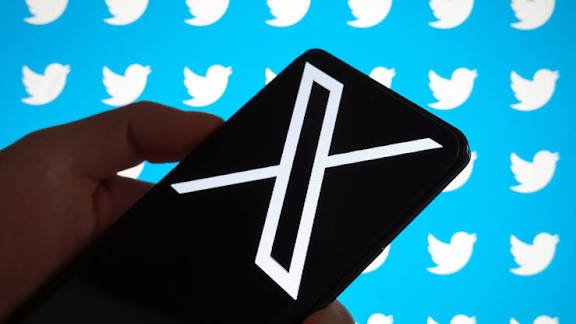
Then Elon Musk bought it in October 2022, for a reported $44 billion. Big number, big deal, honestly one of the more dramatic corporate acquisitions in recent memory. The rebrand to “X” landed in July 2023, and the bird logo got swapped for a plain white X on black.
Since then, ownership has kept shifting internally. X eventually merged into Musk’s AI company xAI, and more recently, SpaceX folded xAI into its own operations. So functionally, X now sits as part of the same corporate family as SpaceX, which is a genuinely unusual pairing, a rocket company and a social media app under one roof.
How Many People Actually Use It?
This is where things get a bit murky, honestly, because X stopped publishing regular public user data after going private.
The clearest, most reliable figure available comes from SpaceX’s own SEC filing in May 2026, ahead of its stock market listing. Since SpaceX now owns X, it had to disclose the numbers as part of that filing. That audited figure landed at roughly 550 million monthly active users, notably below some of the higher numbers X had claimed publicly over the past few years.
Daily posting volume also came in lower than earlier company claims, somewhere around 350 million posts a day, down from the 500 million figure reported back in 2023. So the platform’s still large, genuinely, but quieter than its own marketing suggested for a while.
What Can You Actually Do on X Now?
Beyond the basic posting and following, the platform’s picked up a fair bit of extra functionality since the Twitter days.
Longer posts. Subscribers can now post up to 4,000 characters, a long way from the original 280-character limit that defined the platform for years.
Spaces. Live audio rooms, essentially, where people can host and join real-time voice conversations.
Grok AI integration. X’s built-in AI assistant, developed under the same corporate umbrella, now handles things like translating posts, summarising conversations, and even generating short videos through a text-to-video tool.
Payments. X has been slowly rolling out its own payment features, part of the broader “everything app” ambition Musk’s talked about since the acquisition, bundling social media, messaging, and financial services into one platform.
Premium subscription tiers. Formerly Twitter Blue, now X Premium, offering things like the verification checkmark, expanded post length, and, notably, a real boost in how far your posts actually reach in other people’s feeds.
Is X Still as Influential as Twitter Was?
Depends who you ask, honestly, and depends heavily on what “influential” actually means in this context.
For breaking news and real-time public conversation, X still holds a genuinely strong position. Industry figures still argue in public there. News often breaks there first, before it hits traditional outlets. That reputation hasn’t fully faded, even with the platform’s turbulence.
But the competitive landscape’s shifted a lot. Threads has actually overtaken X in daily mobile users at points, and Bluesky’s absorbed a meaningful wave of users during various platform controversies. I think it’s fair to say X didn’t get replaced by one single competitor, it got unbundled, with different platforms picking off different pieces of what Twitter used to do all in one place.
The Premium Divide
Here’s something worth knowing if you’re actually using the platform, rather than just reading about it from a distance. X Premium subscribers reportedly get significantly more reach than free accounts, some analyses point to a substantial gap in how widely their posts get distributed compared to non-paying users.
That’s a genuinely different dynamic from the old Twitter days, when reach depended mostly on engagement and follower count, not a subscription tier. I think it’s worth knowing going in, particularly if you’re a creator or small business relying on organic reach without paying for Premium.
Should You Still Call It Twitter?
Practically speaking, most people still do, out of habit more than anything else. Search data apparently still shows a huge majority of people searching “Twitter” terms rather than “X” terms, even years after the official rebrand. Old habits, again, dying hard.
Functionally though, it’s worth knowing they’re the same platform now. Twitter.com redirects to x.com. The app’s labelled “X” on both app stores. If someone tells you “check X,” they mean the same place you’d have called Twitter a few years back.
Final Thoughts
X is still, at its core, recognisably the platform Twitter used to be, short posts, real-time conversation, a global audience checking in constantly. But the ownership, the feature set, and the broader ambition behind it have shifted substantially since the 2022 acquisition.
Whether that shift’s been good or bad for the platform is genuinely a matter of ongoing debate, and reasonable people land on different sides of it. What’s clear, at least, is that it’s not quite the same app it was a few years ago, even if the name on your bookmarked tab still says “Twitter” out of pure muscle memory.
Useful links:
- X (social network) — Wikipedia
- X (formerly Twitter) — Statista statistics & facts
- X (formerly Twitter) — Britannica overview
About The Author


