Who Is Neri Oxman? The Scientist-Architect Reinventing Design
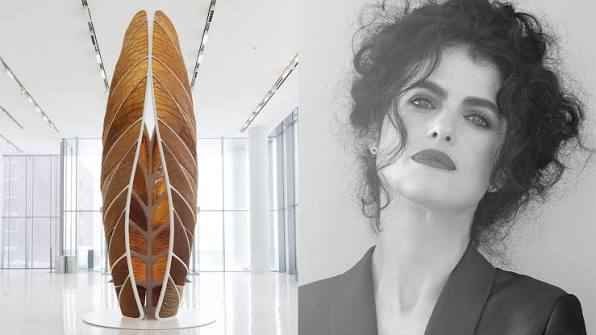
neri oxman
Ask ten people what an architect does and you’ll get ten boring answers. Ask about Neri Oxman, though, and things get weird fast — in the best way.
She doesn’t really design buildings. Not in the traditional sense, anyway. She grows them. Or at least, she’s trying to.
If you’ve never heard the term “material ecology” before, you’re not alone. It’s not a phrase you’ll stumble across in a typical design class. But it might just be one of the most important ideas shaping the future of how we build things — from shoes to skyscrapers.
From Architecture Student to MIT Rebel
Neri Oxman was born in Haifa, Israel, in 1976, to two architect parents. So design was basically in her blood from day one. She studied medicine for a bit before switching to architecture — a detail that, honestly, explains a lot about her later work. You can see the medical, almost biological lens in everything she touches.
She eventually landed at MIT, where she earned her PhD and, in 2010, founded the Mediated Matter group at the MIT Media Lab. The name sounds academic. The work is anything but boring.
In 2006, while still developing her ideas, she coined the term “material ecology.” The concept, in plain English: instead of designing a shape and then picking a material to make it, why not let the material’s own biological behavior shape the design itself? Nature doesn’t assemble parts. It grows, layer by layer, responding to its environment. Oxman wanted architecture — and products, and fashion, and basically everything — to work the same way.
I think that’s the part people find hardest to wrap their heads around at first. We’re so used to thinking of buildings as things made from separate parts — bricks, beams, glass — bolted together. Oxman’s world doesn’t really work like that.
The Work: Silkworms, 3D Printing, and Glass That Breathes
Her lab’s projects read like science fiction, except they’re real.
One of her most famous pieces, the Silk Pavilion, used thousands of actual silkworms to spin silk fibers over a steel frame, guided (gently) by robotic arms that laid down the initial structure. The worms finished the job themselves. It’s equal parts architecture, biology experiment, and strange, quiet art installation.
Then there’s her work with 3D-printed multi-material structures that mimic bone density or skin texture — objects that are rigid in one spot and flexible in another, exactly where they need to be, the same way a leaf or a bone varies its structure. She’s also explored 3D-printed glass, something basically unheard of before her lab figured out how to do it reliably.
Her pieces live in museums now. The Museum of Modern Art in New York has shown her work. So has the Centre Pompidou in Paris and the Cooper Hewitt. That’s a pretty rare crossover — being taken seriously by engineers and art curators at the same time.
OXMAN, the Company (and Why It Matters)
In 2024, Oxman publicly launched OXMAN, a design company she’d actually been quietly building since 2020, with a research lab designed in partnership with Foster + Partners. The pitch is ambitious: apply material ecology at three different scales — tiny (molecules), medium (products), and massive (buildings).
One early product, built on something called the Oo platform, makes biodegradable shoes and textiles using polyhydroxyalkanoates, or PHAs — basically, materials grown by bacteria instead of pumped out of an oil refinery. If that works at scale, it’s a genuinely big deal for an industry drowning in plastic waste.
Is it all going to work exactly as planned? Who knows. Ambitious science-meets-design startups don’t always pan out the way their mission statements promise. But even skeptics tend to admit the underlying research is serious, not just marketing fluff.
Why Students (and the Rest of Us) Should Care
Here’s my honest take: Oxman’s biggest contribution might not be any single object she’s made. It’s the question she keeps asking — what if we stopped treating nature and technology as opposites?
For architecture and design students especially, her work is a reminder that the “rules” of a discipline aren’t fixed. She basically built a new field by refusing to stay inside the old one. That takes guts, and honestly, a fair amount of stubbornness too.
She’s also become a fairly public figure outside academia — she’s married to investor Bill Ackman, which has pulled her into headlines that have nothing to do with silkworms or 3D-printed glass. But reduce her to that and you miss the point entirely.
The real story is a kid from Haifa who looked at a leaf, or a bone, or a spiderweb, and thought: why can’t we build like that?
The Bottom Line
Neri Oxman isn’t just another architect with a fancy portfolio. She’s part scientist, part artist, part provocateur — someone who’s spent two decades arguing that design should learn from biology instead of ignoring it.
Whether OXMAN the company becomes a household name or stays a niche research powerhouse, the ideas she’s pushed into the mainstream — growing structures instead of assembling them, letting materials do the engineering — aren’t going away. If anything, as climate pressure mounts, they’re probably just getting started.
Worth keeping an eye on. I know I will be.
Sources
- Neri Oxman — MIT Media Lab
- Neri Oxman, PhD — Pershing Square Philanthropies
- Neri Oxman’s Productive Frictions — Fast Company
About The Author