
What Does “Enntal” Actually Mean? Sorting Fact from Fabricated SEO Content
enntal
What Does “Enntal” Actually Mean? Sorting Fact from Fabricated SEO Content
Okay, so you searched “enntal,” and now you’ve got about a dozen tabs open, each one confidently telling you something completely different. One says it’s a valley in Austria. Another says it’s a “wellness mindset.” A third calls it a “branding concept for digital identity.” Bit much for one word, isn’t it?
Let’s actually sort through the mess.
The Part That’s Genuinely True
Here’s the one solid, verifiable thread running through everything: “Enn” almost certainly refers to the Enns River in Austria, and “Tal” is the German word for “valley.” Put together, you get something meaning “valley of the Enns.”
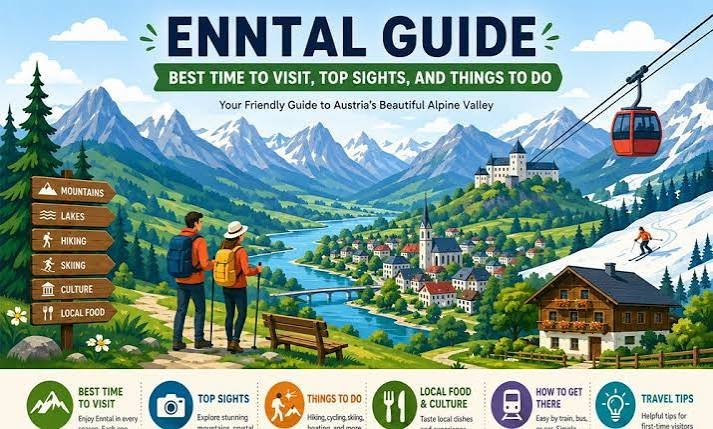
There is a real, well-documented valley region in Austria that follows this exact naming logic, it’s most commonly spelled Ennstal, in Styria, a genuinely beautiful stretch of countryside along the Enns River, known for mountains, hiking, and a fairly quiet, rural character.
“Enntal” looks like it’s most likely a spelling variant, or possibly a simple misspelling, of that established name. German compound words like this aren’t unusual, and slight spelling drift happens constantly online, especially once a term starts circulating without anyone checking it against an actual dictionary.
Here’s Where It Gets Genuinely Weird
Beyond that basic geographic root, things fall apart fast. I went through a batch of articles specifically written about “enntal,” and honestly, they don’t just differ slightly. They flatly contradict each other.
One describes it as a lifestyle philosophy, about slowing down, being present, savouring small moments. Another frames it as an abstract branding and digital identity term, something businesses can supposedly shape around their own purpose. A third calls it an emerging concept tied to “digital innovation” and “user-centric design.” A fourth, more honestly, just admits upfront that the term has no clear, standardized definition anywhere.
That last one’s actually the most useful article of the bunch, ironically, because it’s telling the truth.
Why Does This Happen?
I think this is worth explaining properly, because it’s a genuinely useful thing to understand, not just about this one word.
When a term is obscure enough, a rare spelling, a low-traffic keyword, almost nobody’s actually searched it much before, it creates a strange opportunity. Content sites can write confidently about it, invent a definition, dress it up with SEO-friendly headers and structure, and rank fairly easily, simply because there’s no established, authoritative source actively competing against them.
Multiply that across a dozen different content farms, each inventing their own angle independently, wellness, branding, geography, digital trends, and you end up with exactly what you’re seeing now: a pile of confident, professional-looking articles that can’t agree on what the word even fundamentally refers to.
That’s not a coincidence, honestly. That’s the signature of manufactured content, filling a gap rather than reporting something real.
How Can You Tell When This Is Happening?
A few honest red flags, worth keeping in your back pocket for situations like this one:
- Sources disagree on the basic category of the thing, is it a place, a philosophy, a brand, a tech term? Genuine, established words rarely have this problem.
- No dictionary or encyclopedia backs it up. A quick check against a proper German-English dictionary or a geography reference either confirms or quietly deflates most of these claims.
- Articles openly describe the term as “flexible,” “evolving,” or “emerging.” That phrasing is often a polite way of saying “we don’t actually know, so we’re being vague on purpose.”
- The content reads suspiciously similar across multiple sites. Same structure, similar phrasing, published within a tight window of time, all fairly reliable signs of a content-farm cluster rather than genuine, independent reporting.
So, What Should You Actually Take Away From This?
Honestly, I think the safest, most accurate answer is this: “enntal” most likely traces back to a real place name, a valley region in Austria along the Enns River, more commonly spelled Ennstal. Beyond that geographic root, the word doesn’t currently have any established, verifiable meaning as a lifestyle concept, branding term, or tech buzzword, whatever a chunk of recent SEO content might confidently claim.
If you’re a student, or just someone trying to actually learn something reliable, I think this is a genuinely good practice exercise, honestly. Not every confidently written article online is telling you something true. Sometimes it’s just filling a gap, dressed up to look authoritative.
If You’re Actually Interested in the Real Ennstal
Worth a mention, since the genuine geography here is honestly more interesting than the invented version. The Ennstal region in Austria is known for its alpine scenery, hiking routes, and a relatively untouched, rural character compared to some of Austria’s busier tourist regions. If the geography angle is what actually brought you here, that’s the real, verifiable thread worth following up on.
Final Thoughts
“Enntal” is a good little case study, honestly, in how quickly an obscure word can get buried under confident-sounding, contradictory content once it becomes an attractive, low-competition search term. The real, grounded answer traces back to a valley in Austria. Everything else floating around online right now looks manufactured, dressed up nicely, but built on very little.
Worth double-checking next time a search result feels a bit too certain about something this unfamiliar.
Useful links:
About The Author


