
What Does “Blazertje” Actually Mean? The Honest Answer
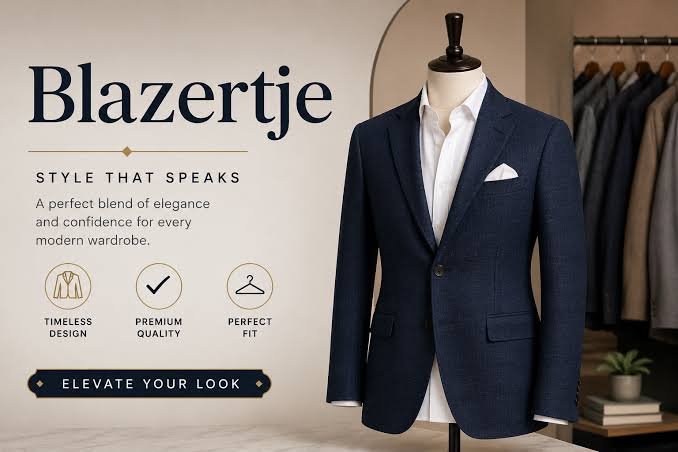
blazertje
What Does “Blazertje” Actually Mean? The Honest Answer
Right, so you typed “blazertje” into Google, and now you’re staring down a wall of articles calling it “the fashion trend everyone’s obsessed with in 2026.” Feels a bit much for one little word, doesn’t it? I thought so too, once I actually dug in.
Let’s clear this up properly.
The Actual Meaning, No Fluff
Blazertje is Dutch. Simple as that. It’s the diminutive form of the word “blazer,” meaning, quite literally, “little blazer” or “small blazer.”
That’s genuinely it. Dutch does this constantly, adding “-je,” “-tje,” “-pje,” or similar endings onto nouns to make them sound smaller, softer, or more casual. Huis becomes huisje (“little house”). Hond becomes hondje (“little dog,” usually said with real affection, honestly). Blazer becomes blazertje, following the exact same pattern.
A Dutch-language dictionary confirms this plainly: blazertje is simply listed as the singular diminutive of the noun “blazer.” Nothing more mysterious than that.
So Why Does It Sound Like a Big Fashion Trend Online?
Here’s where things get genuinely a bit strange, honestly, and worth flagging clearly.
If you search “blazertje” right now, you’ll find dozens, and I mean dozens, of English-language articles insisting it’s a specific, trending garment category. “The Blazertje Explained.” “Everyone’s Obsessed With This Little Blazer.” Some even include personal stories, “I remember the first time I properly understood what a blazertje was,” that sort of thing.
I looked closely at a batch of these. They’re strikingly similar. Same structure, same phrases, same claims, published within a suspiciously tight window of time. That’s a pretty classic sign of AI-generated content written to rank on Google, rather than genuine reporting on an actual fashion movement.
I think it’s worth being honest about that, rather than just repeating the “trend” framing uncritically like a lot of these sites do.
Is There Any Truth in the Fashion Angle At All?
A little, yeah, honestly, but it’s smaller and less dramatic than the hype suggests.
Because blazertje just means “small blazer” in Dutch, it makes sense that Dutch speakers, fashion writers included, would naturally use the word when talking about lighter, shorter, or more relaxed blazers. That’s just normal language use, not evidence of some brand-new global fashion category with its own defined rules.
Lightweight, cropped, more casual blazers absolutely have become popular in recent years, that part’s genuinely true and well documented in mainstream fashion coverage. Softer shoulders, breathable fabrics, styled with jeans or a simple T-shirt instead of full tailoring. But that trend has its own established vocabulary already, “cropped blazer,” “unstructured blazer,” “casual blazer.” Blazertje isn’t some newly coined term for it. It’s just the Dutch word, borrowed and repackaged by content mills looking for a fresh-sounding keyword to write around.
Why Does This Matter?
I think it’s a genuinely useful example of something bigger, honestly. Search engines reward content that looks comprehensive and confident, even when the underlying claim is thin or manufactured. A simple diminutive word gets dressed up as a whole fashion movement, complete with fake personal anecdotes, because that format ranks well.
If you’re a student, or just someone trying to actually learn something accurately, it’s worth building a habit of checking whether a “trend” is genuinely reported by fashion publications, magazines, retailers, journalists, or whether it’s just repeated across a cluster of similarly-styled blog posts with no clear original source. That distinction matters more than people realise.
How to Actually Use the Word
If you’re learning Dutch, or just want to use “blazertje” correctly in conversation, here’s the honest, simple version:
- Use it the way you’d use “little jacket” affectionately in English, casual, warm, slightly informal.
- It fits naturally in a sentence like “Ik draag mijn blazertje vandaag,” meaning “I’m wearing my little blazer today.”
- It doesn’t imply any specific cut, fabric, or style on its own. Context does that work, same as most diminutives.
- If someone’s specifically describing a child’s blazer, or a smaller, lighter-weight one, blazertje works perfectly naturally there too.
A Genuinely Useful Blazer Note, Since We’re Here
Since lighter, more relaxed blazers genuinely are having a moment in mainstream fashion, separate from the manufactured “blazertje trend” framing, it’s worth a quick, honest mention.
Softer-shoulder, unstructured blazers in breathable fabrics like linen or cotton blends have become a genuine wardrobe staple over the last few years, styled casually with jeans and trainers rather than strictly formal wear. That part of the story is real, well-documented, and worth exploring if you’re actually shopping. Just don’t expect “blazertje” to be the magic search term that unlocks it, “cropped blazer” or “unstructured blazer” will get you much better, more reliable results.
Final Thoughts
Blazertje is a small, ordinary Dutch word, “little blazer,” nothing more dramatic than that. The elaborate “fashion trend” framing surrounding it online looks, on close inspection, like a wave of AI-generated content dressing up a simple vocabulary word as something bigger than it actually is.
Worth knowing, honestly, next time a search result feels a little too polished, a little too confident, about something this small. Sometimes a word is just a word.
Useful links:
- Ensie Dutch Dictionary — “blazertje”
- Cambridge Dictionary — “blazer”
- Dutch Diminutive Suffixes — General Grammar Reference
About The Author


