
Horse Care Essentials for New Owners: A Complete Beginner’s Guide
horse care essentials for new owners
Horse Care Essentials for New Owners: A Complete Beginner’s Guide
Bringing home your first horse is one of the most exciting milestones in an equestrian’s life—but it also comes with real responsibility. Horses are large, sensitive animals with specific needs around feeding, shelter, exercise, and health care. Getting the basics right from day one protects your horse’s wellbeing and saves you from costly mistakes down the road.
This guide breaks down the horse care essentials every new owner needs to know, from daily routines to long-term health planning, so you can start your journey with confidence.
Understanding Your Horse’s Basic Needs
Before diving into specifics, it helps to understand what horses need to thrive. At a minimum, every horse requires:
- Fresh water and quality forage available daily
- Safe, weatherproof shelter
- Regular veterinary and farrier care
- Consistent exercise and turnout
- Social interaction with other horses
Meeting these needs consistently is the foundation of good horse care, and everything else builds on top of it.
Feeding Your Horse Properly
Forage First
Horses are grazing animals designed to eat small amounts almost continuously. Good-quality hay or pasture should make up the bulk of your horse’s diet—generally 1.5 to 2% of their body weight in forage per day. Skimping on forage can lead to digestive issues like colic and ulcers, so this is not an area to cut corners.
Supplementing with Grain and Concentrates
Not every horse needs grain. Horses in light work often do fine on forage alone, while those in heavy training or with specific health needs may require concentrated feed. Always introduce new feeds gradually, and consult your vet or an equine nutritionist to build a diet suited to your horse’s age, workload, and health status.
Water and Salt
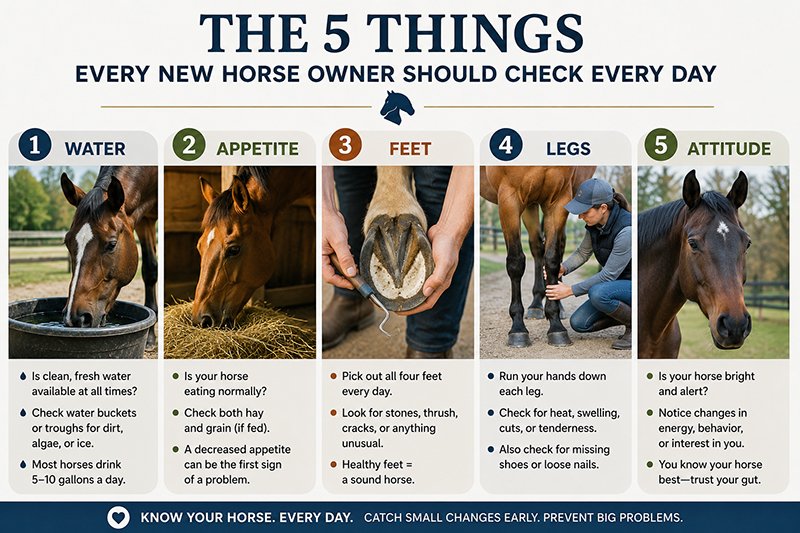
A horse can drink 5 to 10 gallons of water a day, more in hot weather or after exercise. Check troughs and buckets daily for cleanliness and ice in winter. A salt or mineral block also supports proper hydration and electrolyte balance.
Housing and Shelter Basics
Stall vs. Pasture Board
New owners often choose between full-time stabling, pasture board, or a combination of both. Horses generally do best with maximum turnout, since movement supports joint health, digestion, and mental wellbeing. If stalling is necessary, ensure stalls are at least 12×12 feet, well-ventilated, and cleaned daily.
Fencing and Safety
Whatever setup you choose, fencing must be sturdy and horse-safe. Avoid barbed wire, which can cause serious injuries, and inspect fence lines regularly for loose boards, wire, or gaps.
Grooming and Hygiene
Daily grooming isn’t just about appearance—it’s a chance to check your horse over for cuts, swelling, or other issues before they become serious problems. A basic grooming routine includes:
- Curry combing to loosen dirt and dead hair
- Brushing the coat, mane, and tail
- Picking out hooves before and after riding
- Checking eyes, ears, and skin for irritation
Regular grooming also strengthens the bond between horse and owner, making handling easier over time.
Health Care Essentials
Vaccinations and Deworming
Work with a veterinarian to establish a vaccination schedule tailored to your region and your horse’s exposure risk. Common core vaccines protect against diseases like tetanus, rabies, and equine encephalomyelitis. Deworming protocols have shifted toward fecal egg count testing rather than blanket rotational deworming, so ask your vet what’s appropriate for your horse.
Dental Care
Horses’ teeth grow continuously and can develop sharp points that interfere with chewing. Schedule a dental exam, or “float,” at least once a year to keep your horse eating comfortably and efficiently.
Farrier Visits
Hooves should be trimmed or shod every 6 to 8 weeks, even if your horse doesn’t wear shoes. Regular farrier care prevents cracking, imbalance, and lameness, and it’s one of the most important recurring costs to budget for.
Recognizing Illness Early
Learn your horse’s normal vital signs—temperature, pulse, and respiration—so you can spot deviations quickly. Signs like reduced appetite, lethargy, or changes in manure should prompt a call to your vet rather than a wait-and-see approach, since conditions like colic can escalate rapidly.
Exercise and Mental Wellbeing
Horses need regular movement, whether through turnout, riding, or groundwork. Beyond physical fitness, mental stimulation matters too. Boredom and isolation can lead to stress behaviors like cribbing or weaving, so aim for a routine that includes social time with other horses and varied activity.
Budgeting for Horse Ownership
New owners are sometimes surprised by the ongoing costs of horse care. Beyond the purchase price, plan for:
- Boarding or land maintenance
- Feed and hay
- Routine vet and farrier visits
- Emergency medical care
- Tack, equipment, and insurance
Setting aside an emergency fund specifically for veterinary care is one of the smartest financial decisions a new owner can make, since unexpected health issues can arise at any time.
Building a Support Network
You don’t have to figure everything out alone. Establishing relationships with a knowledgeable veterinarian, a reliable farrier, and an experienced trainer or mentor gives you a support system to lean on as questions come up. Many new owners also find value in joining local riding clubs or online communities where they can ask questions and learn from others’ experience.
Final Thoughts
Caring for a horse is a rewarding but ongoing commitment that touches nearly every part of daily life—from feeding schedules to hoof care to emotional wellbeing. By focusing on the fundamentals covered here—proper nutrition, safe housing, consistent grooming, preventive health care, and realistic budgeting—you’ll be well equipped to give your horse a healthy, happy life.
As you settle into ownership, stay curious and keep learning. Every horse is different, and the best care comes from paying close attention to your individual horse’s needs while leaning on trusted professionals for guidance along the way.
About The Author


