Restoran: What the Word Really Means and Where It Came From
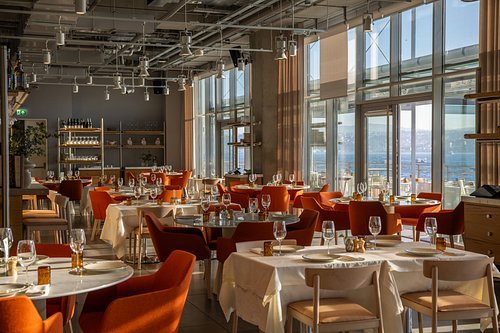
restoran
Restoran: What the Word Really Means and Where It Came From
Funny thing about the word “restoran.” You’ve probably seen it written above a doorway somewhere, in Istanbul, Jakarta, Baku, Tallinn, half a dozen other places, and just assumed it meant exactly what it looks like it means. Turns out, you’d be right. But the story behind that word is way more interesting than I expected.
Let’s actually dig into it.
What Does “Restoran” Mean?
Restoran simply means “restaurant.” That’s it, at the most basic level. It’s the local-language spelling of the English word “restaurant,” used across a genuinely wide spread of languages, Turkish, Azerbaijani, Estonian, Indonesian, Malay, Bosnian, and several others.
Same meaning everywhere, more or less: a place where you go to sit down, order food, and eat a proper meal, usually prepared right there on-site, rather than grabbed and eaten on the run.
I think what’s genuinely fun here is realising how many languages basically borrowed the exact same word, just reshaped slightly to fit their own spelling and grammar rules. That’s not an accident, either.
Where Did the Word Actually Come From?
Here’s where it gets properly interesting, honestly. The word traces all the way back to Latin, specifically restaurare, meaning “to repair” or “to restore.” Not food-related at all, originally. It was about fixing things, rebuilding, bringing something back to a better condition.
From Latin, it moved into Old French as restorer, still carrying that same “restore, renew” meaning. By the 14th century, it had picked up a slightly broader sense too, restoring health, curing something, bringing a person back to full strength.
So how did a word about healing and rebuilding end up meaning “a place that sells dinner”? Genuinely great story, actually.
The Paris Origin Story
Around 1765, in Paris, a man named Boulanger opened a small establishment selling bouillons and consommés, essentially restorative broths, marketed specifically as something that would “restore” a tired or unwell body. Clever bit of branding, honestly, for the time.
He apparently put a Latin motto above his door, roughly translating to “come to me, all who suffer from stomach ailments, and I will restore you.” A little dramatic, sure, but it stuck. People started calling these broth-selling establishments “restaurants,” literally, restorative places.
From there, the word gradually broadened. By 1806, “restaurant” was being used in English specifically to describe an eating house, somewhere you could buy and consume a full meal, not just a healing broth. The healing angle faded. The dining angle took over completely.
I think that’s honestly one of my favourite word-origin stories, precisely because the modern meaning has drifted so far from where it started. Nobody walks into a restaurant today expecting medicinal soup. But etymologically? That’s exactly the DNA the word carries.
How the Word Travelled Across Languages
Once “restaurant” became the standard term in French, and then spread through English, other languages picked it up too, adapting the spelling to match their own phonetic rules.
In Azerbaijani, it became “restoran.” Same story in Estonian, Turkish, and Crimean Tatar. Indonesian and Malay use the same spelling as well. Interestingly, in Tagalog, a related version exists too, though there it’s understood as coming through Spanish rather than directly from French, a nice little reminder that words don’t always travel by one single route.
That kind of widespread borrowing tells you something, honestly. When a concept is genuinely useful and doesn’t already have a perfect equivalent word, languages just borrow it wholesale rather than reinventing the wheel. “Restoran” is a textbook case of exactly that.
Restoran vs. Other Local Dining Words
In a lot of these languages, “restoran” sits alongside other, more casual dining terms. In Tagalog, for example, “restoran” tends to imply a proper, formal sit-down establishment, while “kainan” is the more casual, everyday word for a place to eat.
That distinction shows up in plenty of languages, honestly. The borrowed “restoran” word often carries a slightly more formal, structured connotation, table service, a proper menu, the sit-down experience, compared to more casual local terms for grabbing a quick bite.
Why This Kind of Word History Actually Matters
I think there’s a genuine lesson buried in a small word like this, honestly. Language isn’t static. Words drift, get borrowed, get reshaped by culture, and often end up meaning something almost completely disconnected from their original root.
“Restoran” started life describing medicinal broth for the unwell. It now describes anywhere from a cosy family-run spot to a Michelin-starred dining room. That’s a genuinely huge journey for six or seven letters to travel.
For students of language, or just curious readers, honestly, that’s the fun part. Etymology isn’t just trivia. It’s a small window into how culture, commerce, and everyday habits reshape the words we use without most of us ever noticing.
A Quick Recap
- “Restoran” simply means “restaurant” across many languages, Turkish, Azerbaijani, Estonian, Indonesian, and more.
- It traces back to Latin restaurare, meaning “to restore or repair.”
- The modern dining meaning began in 1760s Paris, with Boulanger’s restorative broth shop.
- The word spread widely because it filled a genuinely useful gap, rather than competing against an existing local term.
Final Thought
Next time you see “restoran” written above a doorway somewhere abroad, I think it’s worth pausing for half a second. It’s not just a foreign spelling of an English word. It’s a tiny fossil of an idea, healing, restoration, comfort, that somehow, over centuries, turned into the modern concept of going out for dinner.
Honestly, that’s a pretty nice thought to carry with you next time you’re deciding where to eat.
Useful links:
- Etymonline — Origin of “Restaurant”
- Wiktionary — “Restoran” Across Languages
- EKI Combined Dictionary — Estonian “Restoran”
About The Author