
What Is Kaliscan? The Manga Site (And the Other Kaliscan) Explained
kaliscan
What Is Kaliscan? The Manga Site (And the Other Kaliscan) Explained
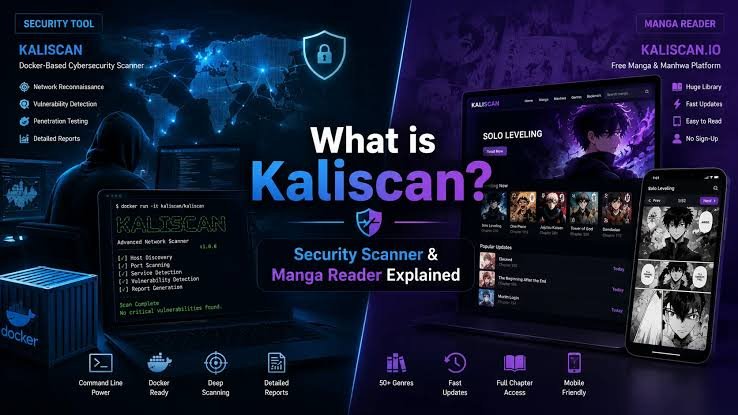
Quick warning before we start: if you googled “Kaliscan” expecting one clear answer, you’re about to get two completely different ones. Genuinely, two unrelated things share this exact name, and it trips people up constantly.
Let’s untangle it.
Wait, There Are Two Kaliscans?
Yep. Confusing, I know. I did a double-take myself the first time I dug into this.
One Kaliscan is a cybersecurity toolkit, a Docker-based scanning tool used for network reconnaissance and vulnerability detection, aimed squarely at security professionals and penetration testers. The name’s a nod to Kali Linux, the go-to operating system in that world.
The other Kaliscan, and honestly the one almost everyone searching this term actually means, is a free website for reading manga, manhwa, and manhua online. Japanese comics, Korean comics, Chinese comics, all in one place, all readable straight in your browser.
This article’s about that second one. If you landed here looking for the security tool, that’s a genuinely separate product, worth a completely different search.
So, What Actually Is Kaliscan.io?
Kaliscan is a browser-based manga reading platform. No app download needed. On most versions of the site, no account required either, you just search for a title and start reading.
It works as what’s called a scanlation aggregator. Rather than translating or licensing content itself, it pulls together fan-translated chapters from various sources across the internet and organises them into one searchable library. The genre spread is genuinely broad, action, romance, fantasy, isekai, horror, slice-of-life, plus a decent chunk of BL and GL titles too.
Two things seem to draw readers to it specifically, based on what’s out there: speed and size. New chapters reportedly show up within hours of the original release in some cases, occasionally even ahead of the official English translation reaching your region. And the library itself spans dozens of genre categories, which is a lot of ground for one aggregator to cover.
Here’s the Bit Worth Actually Understanding: Scanlations and Copyright
“Scanlation” is a mashup of “scan” and “translation.” It refers to fan communities scanning original manga pages and translating them, unofficially, without permission from the original publisher or artist.
This has been happening for decades, honestly, long before Kaliscan existed. It’s a whole subculture with its own history, and a lot of it started from genuine love for series that hadn’t been licensed for English release yet.
But here’s the uncomfortable truth underneath the nostalgia: scanlations are generally unauthorized. The original creators, publishers, and artists typically aren’t compensated for these translations, and aggregator sites hosting them exist in a legal grey zone at best, straightforwardly infringing at worst, depending on the specific title and region.
I think it’s worth sitting with that for a second, honestly. A lot of manga creators work under genuinely difficult conditions already, tight deadlines, thin margins. Free, unlicensed distribution of their work doesn’t help that.
Is Kaliscan Safe to Use?
This one splits into two separate questions, honestly, and they deserve separate answers.
Is reading itself dangerous? Reportedly, no, not in an immediate technical sense. Independent scanners haven’t flagged the main domain for active malware, and simply viewing pages doesn’t appear to pose a direct infection risk based on available reports.
Are there other risks? Yes, and this is where I’d actually pay attention. Ad-supported free sites like this often carry aggressive pop-ups, and users on platforms like TikTok have specifically complained about intrusive ads interrupting the reading experience. There’s also the domain-instability problem, sites like this get blocked or taken down periodically, then reappear under slightly different URLs, which is generally a signal of operating outside proper licensing agreements.
Why Do People Use It Anyway?
Mostly cost and speed, honestly, same reasons that drive most piracy-adjacent behaviour. Not every manga series gets licensed for official English release quickly, or at all in some cases. Fans who want to keep up with an ongoing story sometimes feel like scanlation sites are their only option.
That’s a fair, human motivation. It doesn’t erase the underlying copyright problem, but it does explain why sites like this keep existing despite the legal grey area.
Legal Alternatives Worth Knowing
The good news, genuinely, is that officially licensed manga reading has gotten a lot more accessible in recent years.
- Official publisher apps. Viz Media’s Shonen Jump app offers a huge, fully licensed library for a reasonable monthly fee.
- Webtoon. Hosts a massive amount of officially licensed and creator-published content, with a strong free tier.
- Crunchyroll Manga. Bundles manga access alongside their anime streaming service, often included with an existing subscription.
- Tapas. Focuses on webcomics and manhwa specifically, with both free and paid tiers, all properly licensed.
Supporting these platforms genuinely puts money back toward the actual creators, which scanlation aggregators simply don’t do.
Final Thoughts
Kaliscan, the manga site, offers something genuinely appealing on the surface, free, fast, huge library, no faff. But underneath that convenience sits a real copyright problem, one that scanlation culture has wrestled with for decades without a clean resolution.
If you can find your favourite series on a licensed platform, honestly, that’s worth doing, both for safety’s sake and for actually supporting the people who make the work you’re enjoying. And do double check which “Kaliscan” you actually meant to search for in the first place. Easy mix-up, genuinely.
Useful links:
About The Author


